The phantom driver
A car drifts into your lane on the 76's rural miles; you swerve, hit the shoulder, and they drive on. No contact makes UM "hit-and-run" coverage harder — policies often require physical contact, with exceptions built on independent corroboration: a witness, a camera, a dashcam. Same-day reporting and a corroboration hunt are the whole game, exactly as in the evidence guide. Your word alone usually isn't enough; your word plus one source often is. Whether you live in San Luis Rey or across town, the answer holds.
The road itself
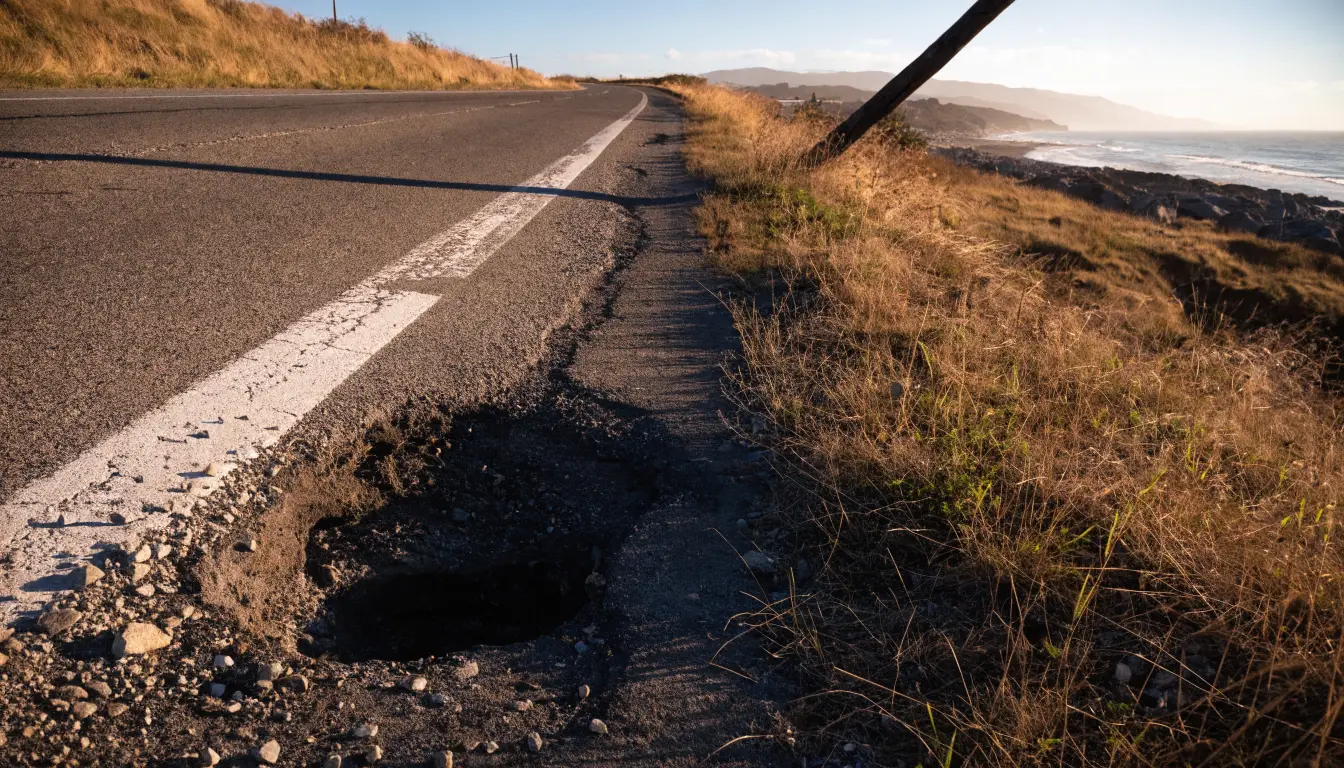
Shoulder drop-offs, unmarked hazards, failed signals, crossing designs — when a dangerous public-road condition causes a crash, the claim runs against the entity, through California's formal government-claim process: six months, not two years. Photograph the condition the same day; roads get repaired with suspicious speed after crashes.
Cargo, debris, and the delivery economy
A ladder in lane three of the 5, gravel streaming from a tailgate — swerve-or-hit crashes from unsecured loads are the hauler's negligence, and haulers carry commercial policies. Plates, dashcams, and immediate reports give the claim somewhere to go.
Who might actually be liable
A 'single-vehicle' crash isn't always the driver's fault — look at:
- A phantom driver who ran you off the road (a UM claim).
- A defective tire, brake, or part (a product claim).
- A dangerous road defect or missing signage (a public-entity claim).
- A negligent repair shop whose work failed.
The vehicle that failed you
Brakes that faded on the grade, a tire that separated — defect claims share one non-negotiable rule: preserve the vehicle un-repaired. The wreck is the evidence; tell your insurer in writing not to salvage until it's inspected. (The same preservation instinct that saves the black-box data.)
All four claims start the same way: refusing the default. If your "solo" crash had a cause with a name, bring the facts — the free review sorts real claims from wishful ones honestly, and the rural-physics version of this problem lives in the country-road guide.
We also help injured people in: TownsiteSan Luis ReyRancho Del Oro