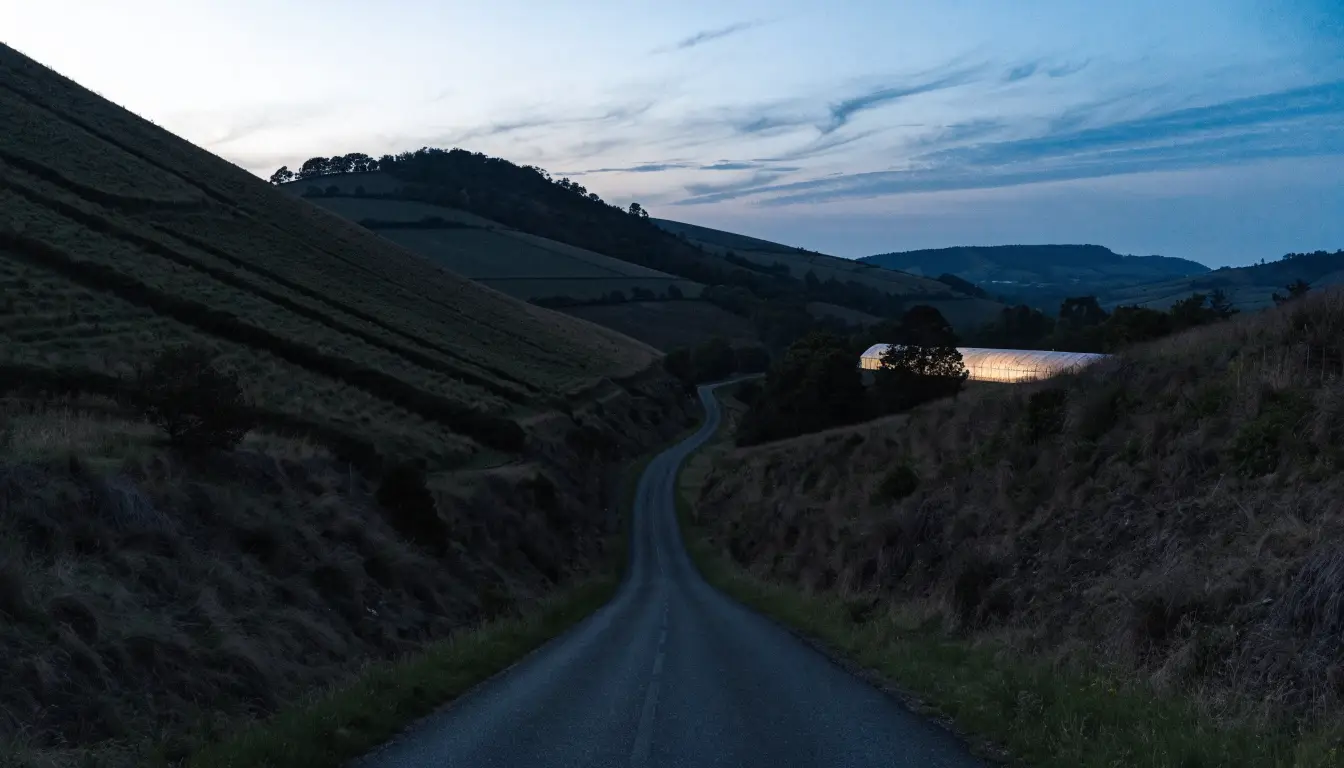
The countryside's crash physics
Two lanes, soft shoulders, blind crests, starlight lighting — and a traffic mix of commuting shortcuts, work trucks, and farm equipment moving at a third of everyone else's speed. Head-on exposure is constant (a moment's drift crosses the only line there is), and closing-speed differentials on slow equipment produce violent rear-ends drivers never saw developing.
Proving a crash nobody watched
The road remembers: skid and yaw marks fix speeds and reactions, gouges and debris fix the impact point, final rest positions reconstruct the collision backward. Vehicles remember more — crush directions and EDR data (speed, braking, steering) contradict false narratives cleanly. The catch is preservation: rain, traffic, and a single street-sweeping erase roadway evidence, and a repaired car is a silenced witness.
The countryside's special cases
Farm equipment collisions: slow-vehicle rules, lighting requirements, and commercial policies for the operation — often stronger claims than drivers assume. Phantom-driver run-offs: forced off by an oncoming drifter who never stopped — provable with corroboration, claimable through UM (the same rules as any fled-driver case). Night pedestrian and rider strikes: the unlit miles' worst outcomes, where reconstruction carries everything.
The country-road hazards in Morro Hills
The rural north brings a different set of crashes:
- Run-off-road wrecks on narrow, unlit lanes.
- Head-on risk on curves with no center barrier.
- Farm-vehicle and slow-traffic conflicts.
- Fatigue and speed on the long dark stretches toward Fallbrook.
If it happened out here
Photograph the road NOW — marks, debris, sight lines from both approaches — before weather votes. Report it (the CHP handles the rural miles), preserve the vehicle un-repaired, and get the review moving while the asphalt still testifies. Thin-evidence cases reward early work more than any other kind; late, they reward nobody.
We also help injured people in: Loma AltaTownsiteSan Luis Rey