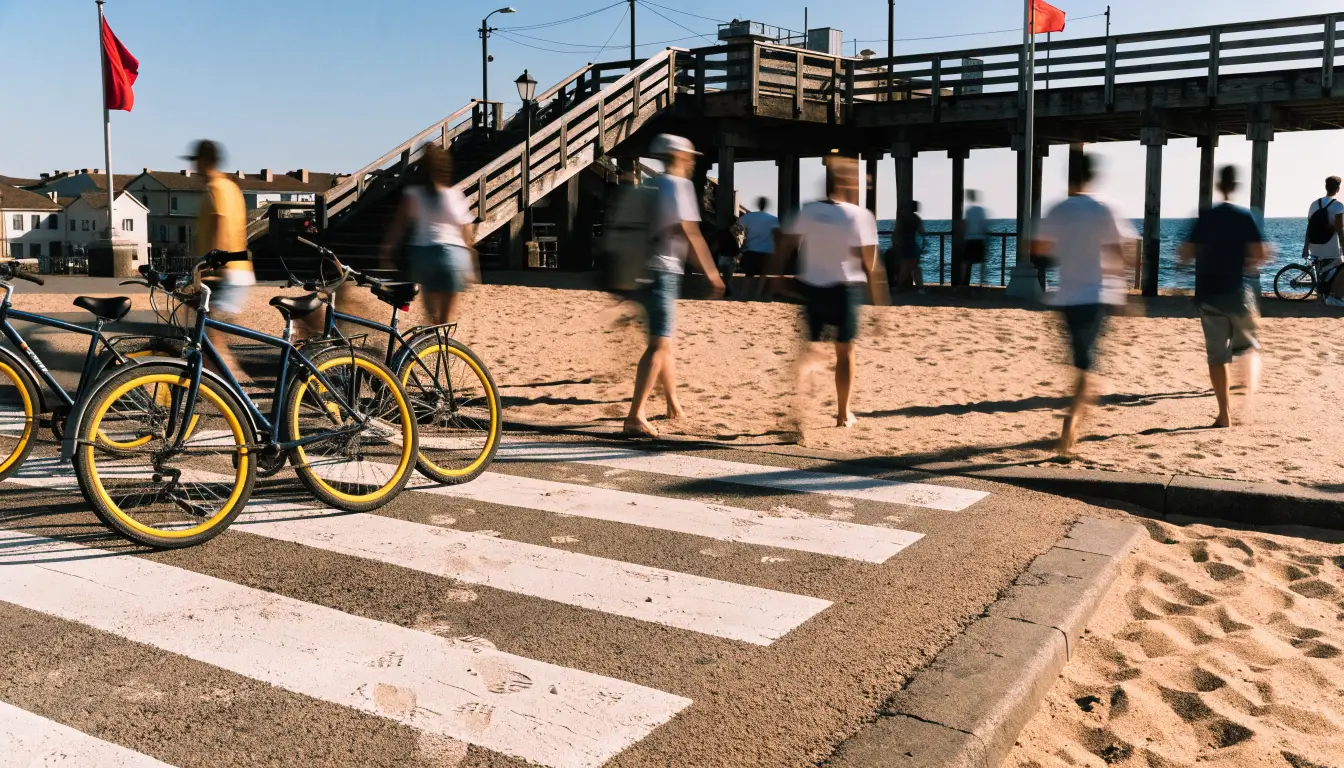
The district's crash geometry
Parking hunters watching curbs, visitors navigating one-ways, golden-hour glare on the ocean-facing blocks, and evening bar traffic — against a constant stream of people crossing to the pier, the beach, and dinner. The mechanisms repeat: the rolling right on red, the mid-block dash misjudged, the crosswalk entered while a driver watched the traffic gap instead of the paint. Whether you live in Downtown Oceanside or across town, the answer holds.
The law leans toward the walker
§21950's yield duty is absolute in crosswalks, painted or not — and the due-care clause covers pedestrians everywhere else, meaning even a mid-block crossing creates a comparative percentage, never a bar. "They came out of nowhere" describes the driver's attention, not the pedestrian's fault. See federal pedestrian-safety data for why this body of law keeps tightening.
The 72-hour evidence window
Every collision in this district happened in front of lenses — hotel entrances, bar corners, the pier approaches — and beside witnesses holding phones. Both cycle out within days: visitors fly home, footage overwrites. The same-week canvass is the case; the canvass mechanics apply to every district strike, fled driver or not.
Where pier-district strikes happen
The pier and beach district concentrates pedestrian risk:
- Coast Highway crosswalks with heavy foot traffic.
- Beach parking lots with cars backing out.
- Nighttime strikes near the restaurant and bar strip.
- Distracted drivers watching the ocean, not the road.
If it was you or yours
Same-day medical care (adrenaline hides pedestrian injuries too), the police report, photos of the exact crossing, and no statements to the driver's insurer. Your own auto policy's UM coverage may apply even on foot — a rescue when the driver's coverage disappoints. Then the pedestrian-claims page and a free review — before the district's footage cycle erases the easy proof.
We also help injured people in: Downtown OceansideSouth OceansideFire Mountain