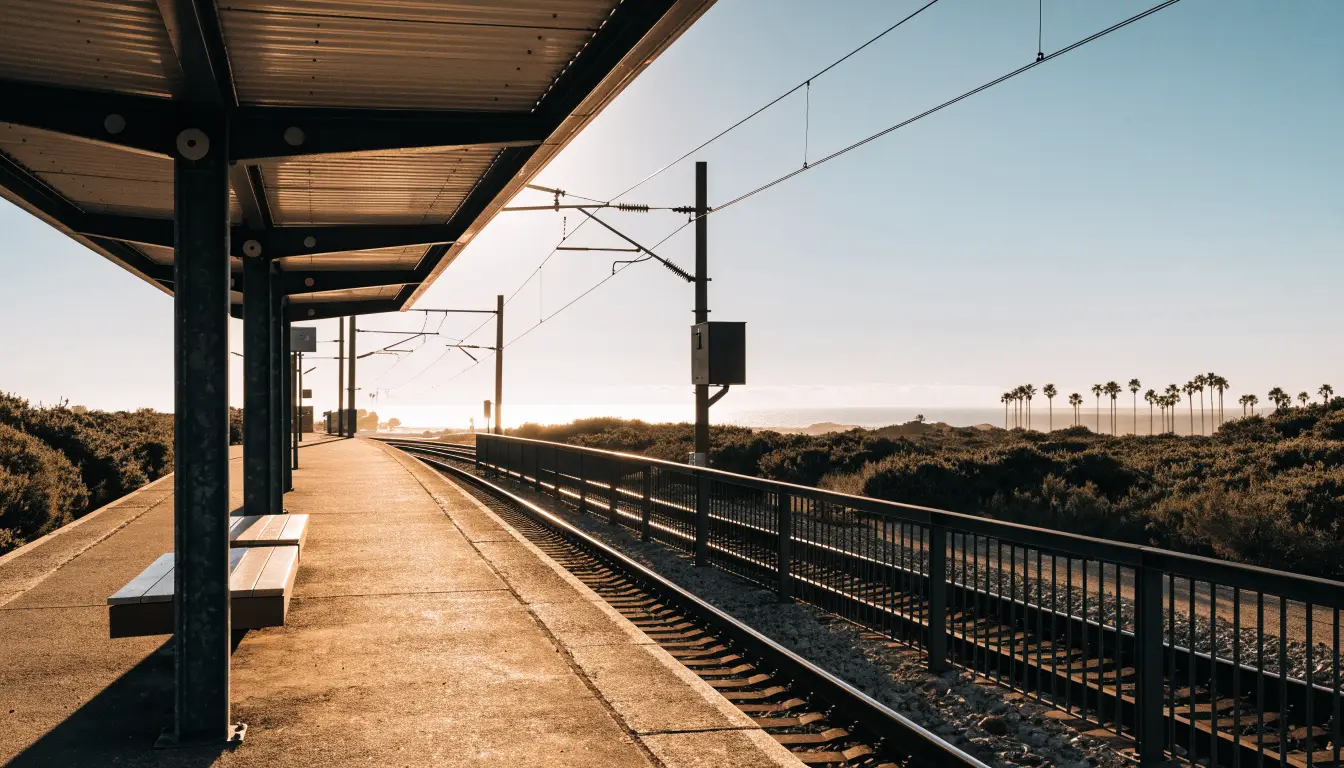
Crashes on a timetable
Station crashes cluster around arrivals — a COASTER or SPRINTER unloads and the surrounding blocks fill with hurried pickups, u-turns, and walkers cutting to parking. The schedule that creates the pattern also proves it: your crash time against the timetable establishes the surge context, and "predictable chaos" is a condition drivers are charged with anticipating, exactly like the base gates' waves. A crash in Fire Mountain follows the same rules.
The district's claim types
Pedestrians and cyclists: the crosswalk and due-care duties from the downtown guide apply in force — station districts are where mid-block crossing meets pickup-lane impatience, and comparative percentages get argued hard. Rideshare and pickup conflicts: stops in live lanes and app-distracted circling — with the coverage periods deciding whose policy answers when a working driver's involved. Park-and-ride pull-outs: lot-mouth conflicts against commuter-timed urgency, ordinary negligence with lot cameras watching.
The evidence infrastructure
Transit districts are watched: platform and lot cameras, the adjacent businesses, and the schedule itself. Formal preservation requests reach transit-system footage — a step with its own lead times, so the same-week rule applies doubly. Witnesses here are commuters: regulars, findable, and gone by the next train if you don't get numbers.
The transit-center crash patterns
The Oceanside Transit Center mixes rail, bus, and road traffic:
- Pedestrian strikes crossing between the station and Coast Highway.
- Bus and rideshare pick-up/drop-off conflicts.
- Rear-enders in the congested approach streets.
- Rail-crossing incidents where the tracks meet the road.
If the district caught you
Report (OPD), photograph, same-day medical, and note the exact time — the timetable turns it into context. Rail-adjacent incidents flag the public-entity question and its six-month clock. Then the free review: station-district claims reward the early canvass like the rest of downtown, and the trains won't wait for your evidence.
We also help injured people in: Rancho Del OroIvey RanchOcean Hills