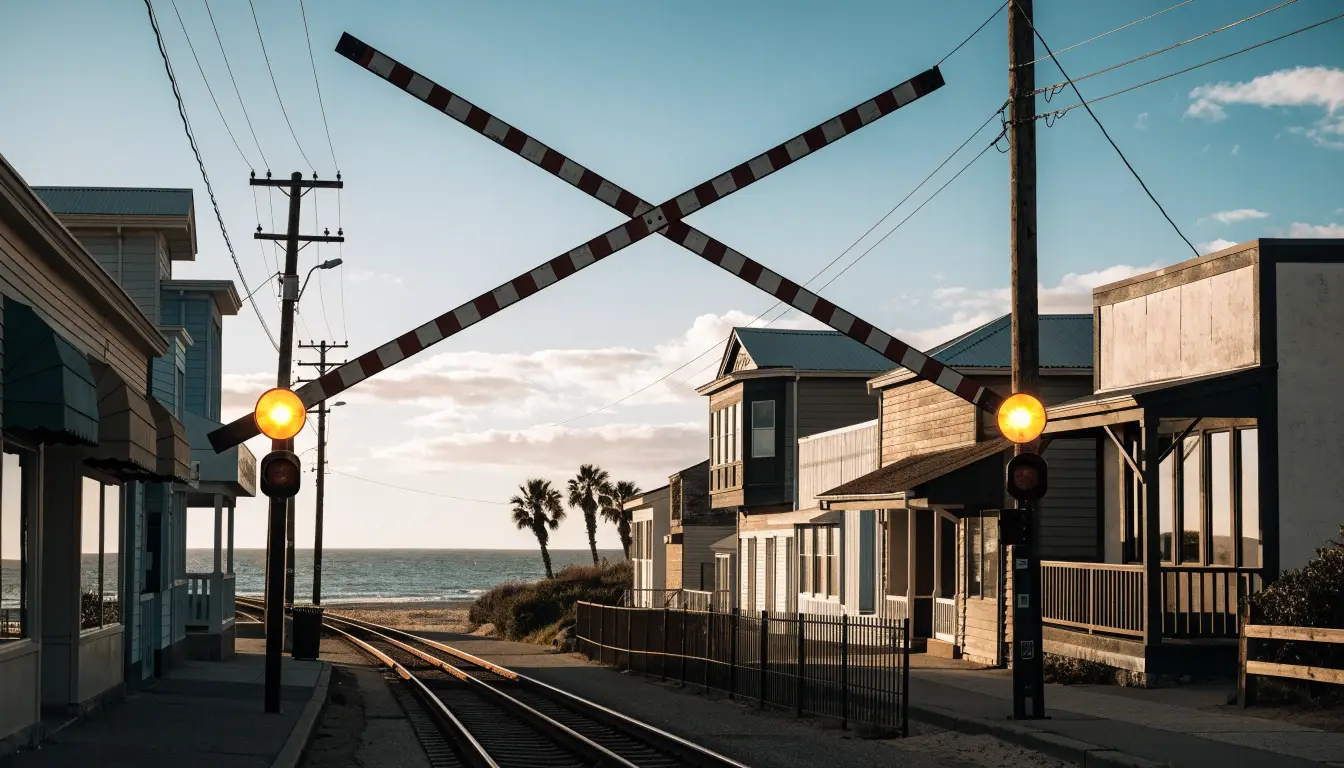
The three claim types at a crossing
Driver-versus-driver: the queue rear-end, the driver who blocks the tracks and forces others' evasions, the left-turner trapped by descending arms and hit escaping. Ordinary negligence — with the crossing context explaining conduct juries otherwise find baffling. A crash in Arrowood follows the same rules.
The design claim: when sight lines, signal timing, or approach geometry played a causal role, the responsible public entities enter — and California's government-claim rules give you six months, not two years. Same-day photos of the crossing as-it-was matter enormously; crossings get 'improved' quickly after incidents.
Train strikes: rare, severe, and heavily investigated by multiple agencies — catastrophic-scale claims needing counsel immediately, with federal overlays and evidence (event recorders, crossing data) that must be formally preserved.
Cyclists and walkers on the corridor
South O's crossings carry constant foot and bike traffic between the neighborhood and the beach — and crossing surfaces, flange gaps, and channelization create fall-and-strike hazards of their own. Cyclist crossing crashes mix driver-negligence and design questions more than any other claim here; bring the exact location, because inches matter. The broader unprotected-victim playbook: the pedestrian and bicycle page.
What to do after a rail-crossing crash
Rail-crossing crashes involve extra parties and evidence:
- Get medical care and the police report first.
- Note the crossing ID and whether the gates and lights worked.
- Preserve any dashcam and nearby camera footage.
- A lawyer can pursue the railroad or transit agency if the crossing failed.
If it happened at the tracks
Photograph the crossing from your approach angle same-day, note the signal state, get witnesses (crossing incidents always have watchers), and treat the six-month question as urgent triage in the free review — it's the deadline that quietly kills otherwise-valid claims. Day-one basics: the 24-hour guide.
We also help injured people in: San Luis ReyRancho Del OroIvey Ranch