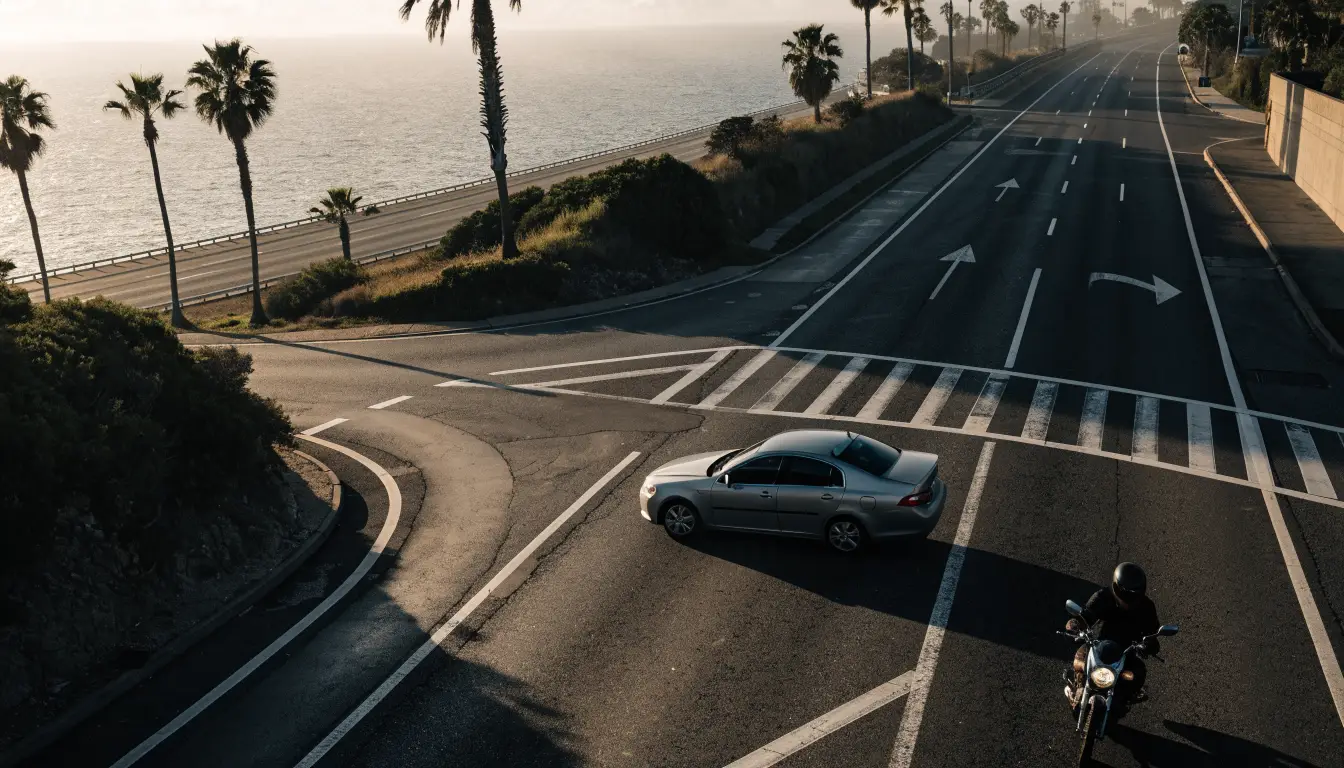
Why this crash owns the statistics
Riders present a narrow profile that drivers' brains mis-time — and Oceanside's geometry feeds it: Coast Highway's block-after-block left turns across beach traffic, Mission Avenue's gaps, El Camino Real's big signalized crossings. The turner guesses at a gap that isn't there, and the rider pays the physics. Loma Alta drivers deal with this same situation every week.
The statute is the rider's case
No motorcycle exception, no visibility proviso. When the defense argues speed, they're arguing a comparative percentage against a statutory presumption — a discount fight, not a fault reversal. Bring evidence and the presumption holds.
Proving the three seconds
- Cameras — beach-district businesses watch these intersections; footage settles gap-timing instantly and cycles in days.
- The turning car's own data — modern EDRs log speed and braking; proving they never braked converts “sudden emergency” into inattention.
- Crush and throw analysis — impact points and distances reconstruct closing speeds better than any estimate.
- Turn context — racing a stale yellow across oncoming traffic is a pattern juries recognize.
After the crash
These cases pair serious injuries with clean liability — which is why insurers need to discount them early. Decline the recorded statement, keep the bike un-repaired until documented, canvass the intersection within the week, and get a rider-fluent read on the percentages before anyone assigns them for you. What the case may be worth, and how long it takes, is covered honestly in the rider settlement guide.
We also help injured people in: ArrowoodMorro HillsDowntown Oceanside