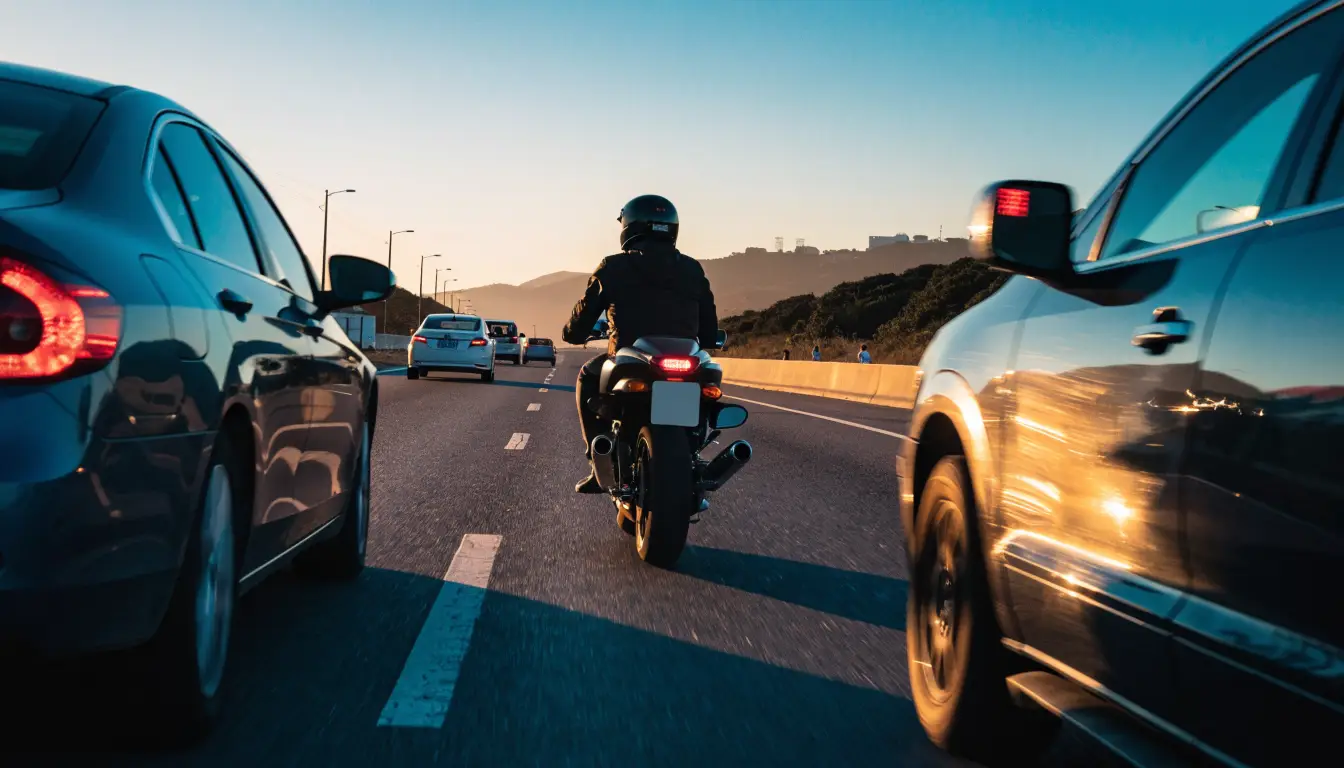
The law, plainly
AB 51 wrote splitting into the Vehicle Code and tasked the California Motorcyclist Safety Program with safety guidance — modest speed differentials, when to hold your lane. The guidance is advice, not statute: riding outside it can feed a comparative-fault argument; splitting itself is never the violation. Whether you live in Fire Mountain or across town, the answer holds.
The crash that defines these cases
Hypothetically: a rider splits lawfully through the stopped 5 southbound at the 78 when a driver — bored in the merge, phone in hand — drifts into the gap. The driver's duty to check before moving didn't dissolve because the rider was between lanes. Fault sits where it always sits: on the unchecked lane change. On this corridor the scenario repeats daily; base commuters live it every morning.
How insurers fight it anyway
Three moves: call splitting reckless (it's legal), inflate your speed (make them prove it), lean on juror bias (address it, don't fear it). The counters are physical — crush and scrape patterns fix lane positions, helmet-cam and dashcam footage ends arguments, and CHP guidance becomes YOUR exhibit when the riding fit it. The broader playbook is the rider claims page; the value-and-timeline questions get their own straight answer in the settlement guide for riders.
How California lane-splitting law works
Lane-splitting is legal in California, and these factors decide fault:
- Legality: splitting between lanes is expressly permitted for motorcycles.
- Reasonable speed: a modest speed differential is defensible; a large one is not.
- The driver's duty: motorists can't block or door a splitting rider.
- The evidence: cameras and lane position prove you split safely.
After a splitting crash
Preserve the bike and gear un-repaired until photographed, pull your own footage immediately, decline every speed-estimate question — “the physical evidence will show speeds” is a complete answer. And for military riders: your claim runs on civilian law regardless of status, and deployment never forfeits it.
We also help injured people in: Rancho Del OroIvey RanchOcean Hills