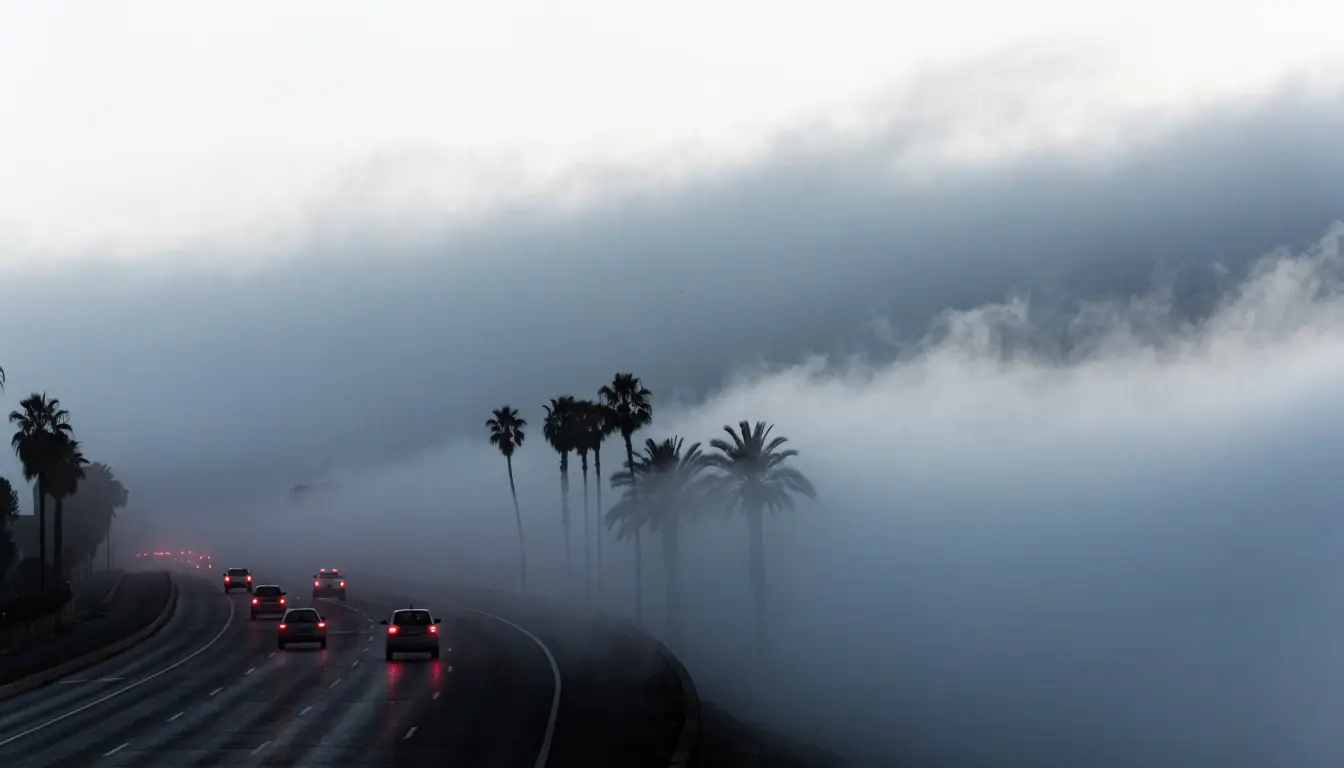
The gray-morning crash pattern
May Gray and June Gloom compress visibility on the 5, the coastal arterials, and the valley mouths — and the crashes follow a script: full-speed drivers overrunning slowed traffic, chain-reactions where following distances were built for sunshine, and intersection strikes where cross-traffic materialized out of the wall. The physics are ordinary; the visibility just deletes everyone's margins. Whether you live in Morro Hills or across town, the answer holds.
What the law actually says
The basic speed law is the whole case: reasonable speed FOR CONDITIONS, posted limits notwithstanding. A driver doing a lawful 65 into a 200-foot visibility bank is negligent; one who slowed appropriately and was rear-ended holds clean liability against the runner who didn't. "Sudden emergency" defenses fail against foreseeable weather — and a marine layer that arrives most mornings from May to July is the definition of foreseeable.
Chain reactions: the multi-insurer knot
Fog pileups fragment fault across every following distance in the chain — each driver liable to those ahead for their own gap, several insurers pointing backward at once. Position in the chain, EDR data (the black box proves who was slowing), and damage-pattern analysis sort it out. Multi-car gray-morning claims are exactly the apportionment fights where representation stops your claim from being everyone else's discount.
Driving the marine-layer fog safely
Oceanside's coastal fog causes a distinct class of crashes:
- Low-speed chain reactions when visibility drops suddenly.
- Rear-enders on the I-5 and Coast Highway at dawn.
- Failure to use low-beams and slow down in the murk.
- Fault still falls on the driver who was going too fast for conditions.
If the gray caught you
Standard day-one steps, plus: note the visibility specifically (photos capture it; your written estimate helps), identify chain position early, and expect every insurer in the pileup to slow-walk while apportionment shakes out. The {CHP} works these corridors' fog crashes constantly — get the report number before the layer burns off and everyone's memory of the gray goes with it.
We also help injured people in: Ocean HillsArrowoodMorro Hills