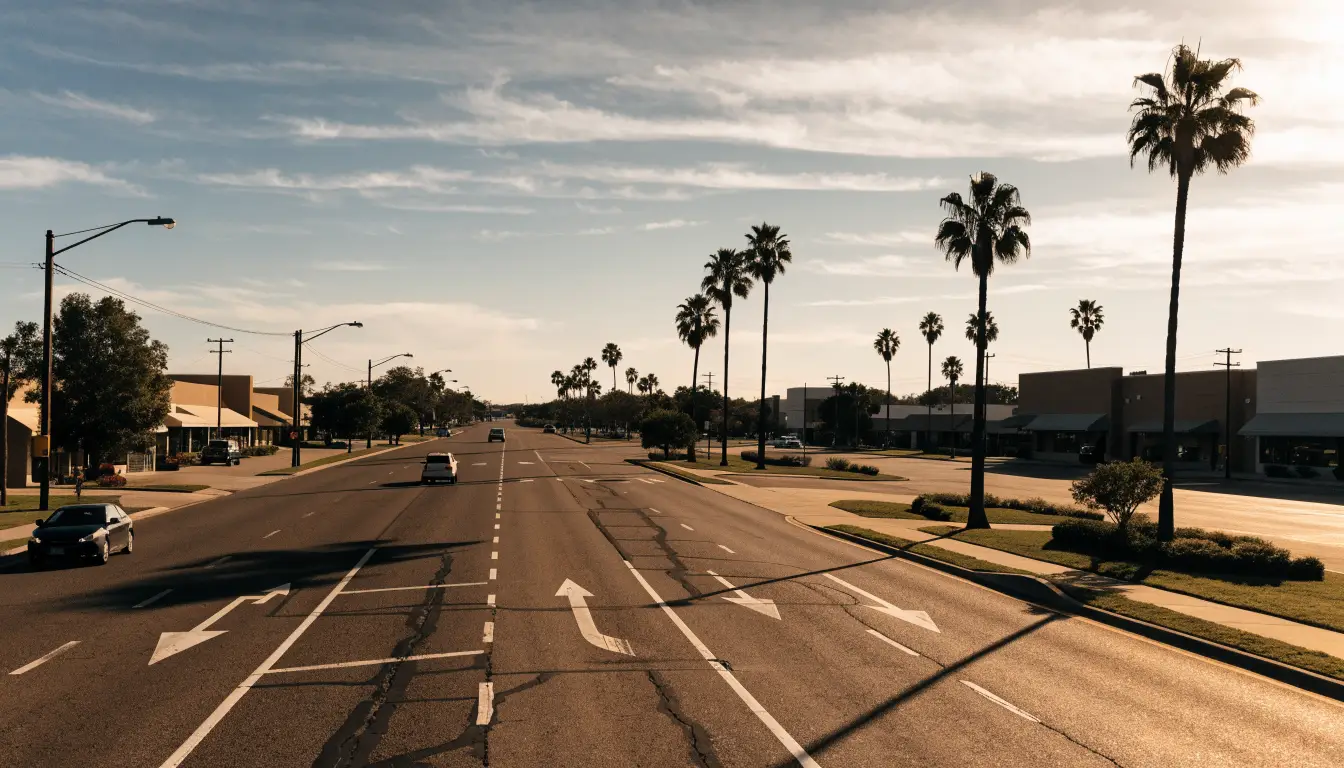
Why retail arterials crash this way
El Camino Real carries commuter volume at real speed past a driveway every few hundred feet — each one a decision point where someone entering guesses at a gap. The corridor's physics: entering vehicles at 5 mph meeting through traffic at 45, left-turners threading pockets across multiple lanes, and the visual noise of signs and lots eating driver attention. Add distracted driving to that environment and the steady claim flow explains itself. Downtown Oceanside drivers deal with this same situation every week.
The fault patterns
Driveway pull-outs: entering drivers owe the yield — these claims favor through traffic strongly, subject to speed arguments. Pocket left-turns: the §21801 yield duty again, with multi-lane visibility screens ("the first lane waved me out") as the recurring wrinkle — screened-lane crashes still land mostly on the turner. Lot mouths: half on private property, half on the street, all on ordinary negligence — with the lot's cameras watching.
The camera-rich corridor
Every anchor store, gas station, and drive-through on the corridor points lenses at its own entrance — which is to say, at the crash scene. Same-week canvasses here succeed at rates the rest of the city envies; same-month ones find overwritten drives. The mechanics are the standard ones from the evidence guide, minus the mystery driver.
The El Camino Real crash patterns
This busy north-south arterial concentrates specific crashes:
- Left-turn crashes at the major signalized intersections.
- Rear-enders in the stop-and-go retail traffic.
- Red-light-running at the wide crossings.
- Pedestrian strikes near the shopping centers.
If the corridor caught you
Report it (Oceanside PD; the California Highway Patrol near the 78 junctions), photograph before vehicles move, note which businesses face the scene, and get seen same-day — corridor crashes skew "moderate" and mature into real claims as symptoms surface. Then the free review, inside the camera window.
We also help injured people in: Downtown OceansideSouth OceansideFire Mountain