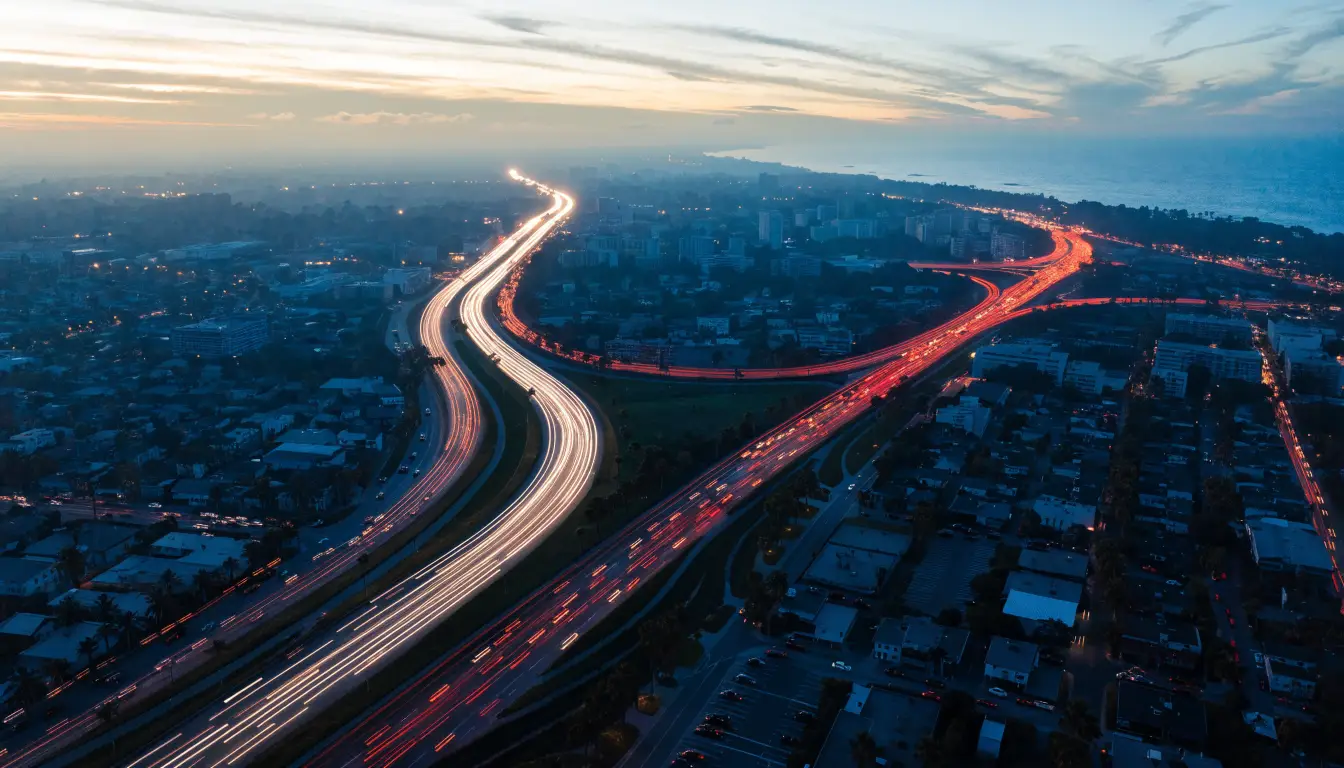
Why this spot, structurally
The 78 is born here — all of inland North County's coastal traffic funnels through one junction, with exits, entries, and through-lanes braiding in a few hundred yards. Add evening compression and marine-layer mornings, and speed differentials do the rest. It's not that drivers here are worse; the geometry simply offers more chances per mile. We hear this question from San Luis Rey as often as from anywhere else in town.
The two crash signatures
Rear-end chains: compression waves catch following distances built for open road. Liability is usually clean (the rear car), but multi-car chains fragment fault across several insurers who all point backward.
The weave dispute: two vehicles converge on one gap; contact; both report the other drifted. No witness, no camera — a coin flip? No: the vehicles remember. Crush angles fix lane positions, EDRs log steering and braking, and the physical record usually contradicts one story cleanly.
Why the I-5/78 interchange is so crash-prone
The interchange concentrates several hazards at once:
- Sudden slowdowns where two freeways merge and weave.
- Short weaving distances that force abrupt lane changes.
- Backups that trigger high-speed rear-enders.
- Heavy commuter and beach traffic overlapping at peak hours.
Winning the he-said-she-said
Same-day: photos of both cars' damage before repair, the California Highway Patrol report number, any dashcam. Same-week: preservation demands on both vehicles' data and the corridor's cameras. The interchange's disputes are genuinely winnable — they're just won with evidence gathered before anyone knew there'd be a fight, which is the whole argument for the free week-one review. The rest of the day-one playbook: the first 24 hours.
We also help injured people in: TownsiteSan Luis ReyRancho Del Oro